
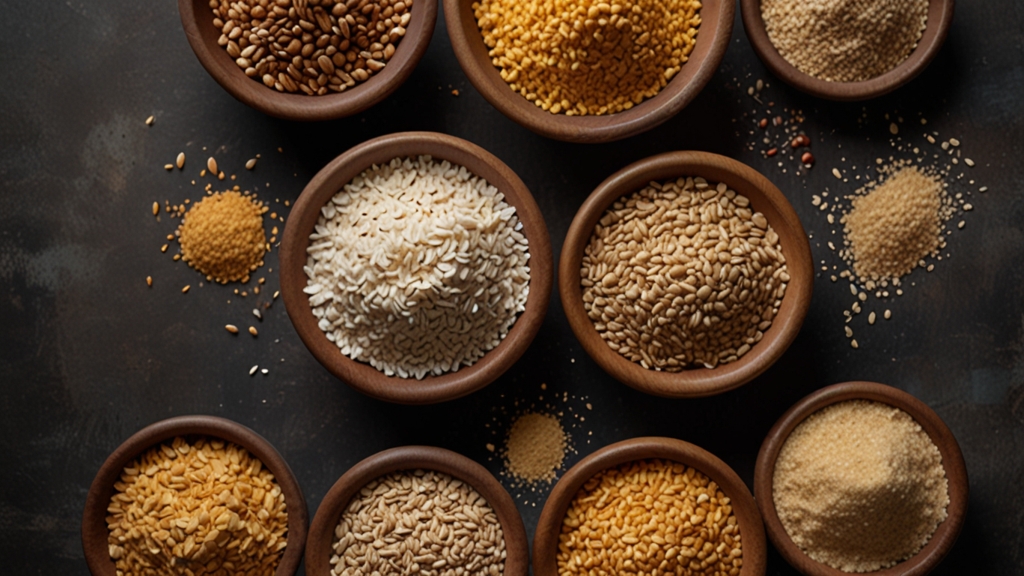
Teff: Tiny Grain, Big Numbers — USDA Nutrition Data
If you have been navigating the gluten-free aisle for any length of time, you already know that not all alternative grains are created equal. Some deliver little more than starchy filler; others punch well above their weight in minerals and fiber. Teff — the ancient Ethiopian staple that gives injera its characteristic tang — falls firmly in the second camp. The USDA nutrition figures below tell a compelling story for anyone trying to eat well without gluten.
What the USDA Data Actually Shows
The table below presents every nutrient recorded for cooked teff in the USDA FoodData Central database. All values are per 100 grams of the cooked grain — roughly a generous half-cup serving — so the numbers reflect what ends up on your plate, not a dry lab sample.
| Nutrient | Teff, Cooked (per 100 g) |
|---|---|
| Energy | 101 kcal |
| Protein | 3.87 g |
| Total Fat | 0.65 g |
| Carbohydrate | 19.9 g |
| Dietary Fiber | 2.8 g |
| Calcium (Ca) | 49 mg |
| Iron (Fe) | 2.05 mg |
| Magnesium (Mg) | 50 mg |
| Potassium (K) | 107 mg |
| Zinc (Zn) | 1.11 mg |
| Sodium (Na) | 8 mg |
Iron and Calcium: The Standout Story
For gluten-free eaters, two numbers in that table deserve particular attention: 2.05 mg of iron and 49 mg of calcium per 100 grams of cooked grain. These figures matter because many common gluten-free staples — white rice flour, tapioca starch, potato starch — contribute very little of either mineral. Teff arrives at the table with both, making it genuinely useful as a base grain rather than a neutral filler.
To put the iron figure in perspective without making any medical claims: the 2.05 mg present in a 100 g cooked serving represents a meaningful contribution toward the daily intake most adults need, and it comes packaged with 2.8 g of dietary fiber in the same bowl. Fiber slows digestion, which influences how steadily energy is released from the 19.9 g of carbohydrate present — a useful general consideration for anyone trying to avoid sharp energy swings throughout the day.
The calcium figure of 49 mg is similarly notable. Dairy-free gluten-free diets can struggle to reach adequate calcium, and most grain staples offer negligible amounts. Teff’s 49 mg per 100 g cooked is not a replacement for dairy or fortified foods, but it is a genuine, food-first contribution that adds up when teff appears regularly in your cooking.
The Full Mineral Picture
Iron and calcium are the headline acts, but the supporting cast matters too. Magnesium comes in at 50 mg per 100 g — actually edging out calcium by a single milligram — and magnesium is a mineral many people eating a heavily processed gluten-free diet simply do not get enough of. Potassium reaches 107 mg, zinc contributes 1.11 mg, and sodium sits at a very modest 8 mg, which means you control the salt in any recipe you build around teff. That low sodium baseline is particularly welcome when teff appears in savory dishes where you might otherwise be fighting against a grain that already carries significant sodium.
Interpreting the Numbers for Baking and Cooking
Nutrition data only becomes useful when it connects to what actually happens in your kitchen. Here is what the teff figures mean in practical terms:
- Protein at 3.87 g per 100 g cooked contributes to satiety and, in baking, to the structure of the final product. Gluten-free baking notoriously struggles with structure because gluten itself is a protein network. A flour base that includes teff brings more protein to the mix than many starchy alternatives, which can help baked goods hold together with less added binder.
- Dietary fiber at 2.8 g per 100 g cooked affects texture in a direct way: teff-based porridges and batters tend to thicken readily and hold moisture well. In bread or muffins, this moisture retention can extend shelf life and prevent the dry, crumbly result that plagues many gluten-free loaves.
- Fat at just 0.65 g per 100 g means teff is not contributing richness on its own. You will want to add fat deliberately in most baking applications to achieve a tender crumb. Think of the grain as a lean, mineral-dense canvas rather than a self-sufficient ingredient.
- 101 kcal per 100 g cooked is a moderate energy density. Teff porridge is filling because of the fiber and protein working together, not because it is calorically dense.
How to Use This in Your Kitchen
Practical Takeaways
- Use cooked teff as a porridge base on mornings when you want iron and calcium from whole food rather than a supplement. At 101 kcal per 100 g, you can build a satisfying bowl by adding fruit, nuts, and a splash of plant milk without tipping into an oversized calorie count.
- Blend teff flour into gluten-free bread and pancake mixes at a ratio that still lets the recipe work texturally. The 2.8 g of fiber per 100 g cooked means small additions shift the nutritional profile noticeably.
- Lean on teff in savory dishes — grain bowls, stuffed vegetables, grain-based salads — where its 8 mg of sodium per 100 g gives you full seasoning control.
- Pair teff with vitamin-C-rich ingredients (citrus juice, tomatoes, bell peppers) when you are cooking for iron absorption purposes. This is general food-pairing knowledge, not a medical recommendation, but it is how traditional cuisines have long combined plant-based iron sources with acidic accompaniments.
Frequently Asked Questions
How much iron does cooked teff actually provide per serving?
According to USDA FoodData Central, cooked teff contains 2.05 mg of iron per 100 grams. A generous half-cup serving falls approximately in that range, making it one of the more iron-rich whole grain options available to gluten-free cooks.
Is teff a good source of calcium for dairy-free eaters?
The USDA data records 49 mg of calcium per 100 g of cooked teff. While that is not equivalent to dairy, it is a real contribution from a whole grain — something most gluten-free staple grains do not offer at a comparable level. Combined with other calcium-containing foods across the day, it adds up meaningfully.
Does the fiber in teff affect how it behaves in recipes?
Yes, in practical terms. At 2.8 g of dietary fiber per 100 g cooked, teff absorbs liquid readily and can thicken batters and porridges more efficiently than low-fiber starches. In baking, this moisture-holding capacity generally improves texture and keeps gluten-free baked goods from drying out as quickly.
How does teff’s calorie count compare to its nutrient density?
Cooked teff provides 101 kcal per 100 g alongside 3.87 g protein, 2.8 g fiber, 50 mg magnesium, 49 mg calcium, and 2.05 mg iron. That combination of moderate calories with a broad mineral profile is exactly what makes teff worth considering as a regular ingredient rather than an occasional novelty in a gluten-free kitchen.
About the Data
All nutrition figures in this article are drawn exclusively from USDA FoodData Central (fdc.nal.usda.gov), the official U.S. government food composition database. The specific entry used is Teff, cooked, FDC ID 168918. Data was retrieved on 2026-07-18. As with all entries in FoodData Central, values represent a laboratory analysis of a specific sample and may vary depending on growing conditions, processing method, brand, and batch. Use these numbers as a reliable general guide, but expect some natural variation in the teff products you purchase.